Oceania & Pacific
The best time to visit Fiji
Three hundred islands where the southern winter is the sunny season and 'Fiji time' is both a warning and the entire point.
- Best months
- May to Jun and Sep to Oct
- Think twice
- Jan and Feb
- Quietest
- February
- Cheapest
- February
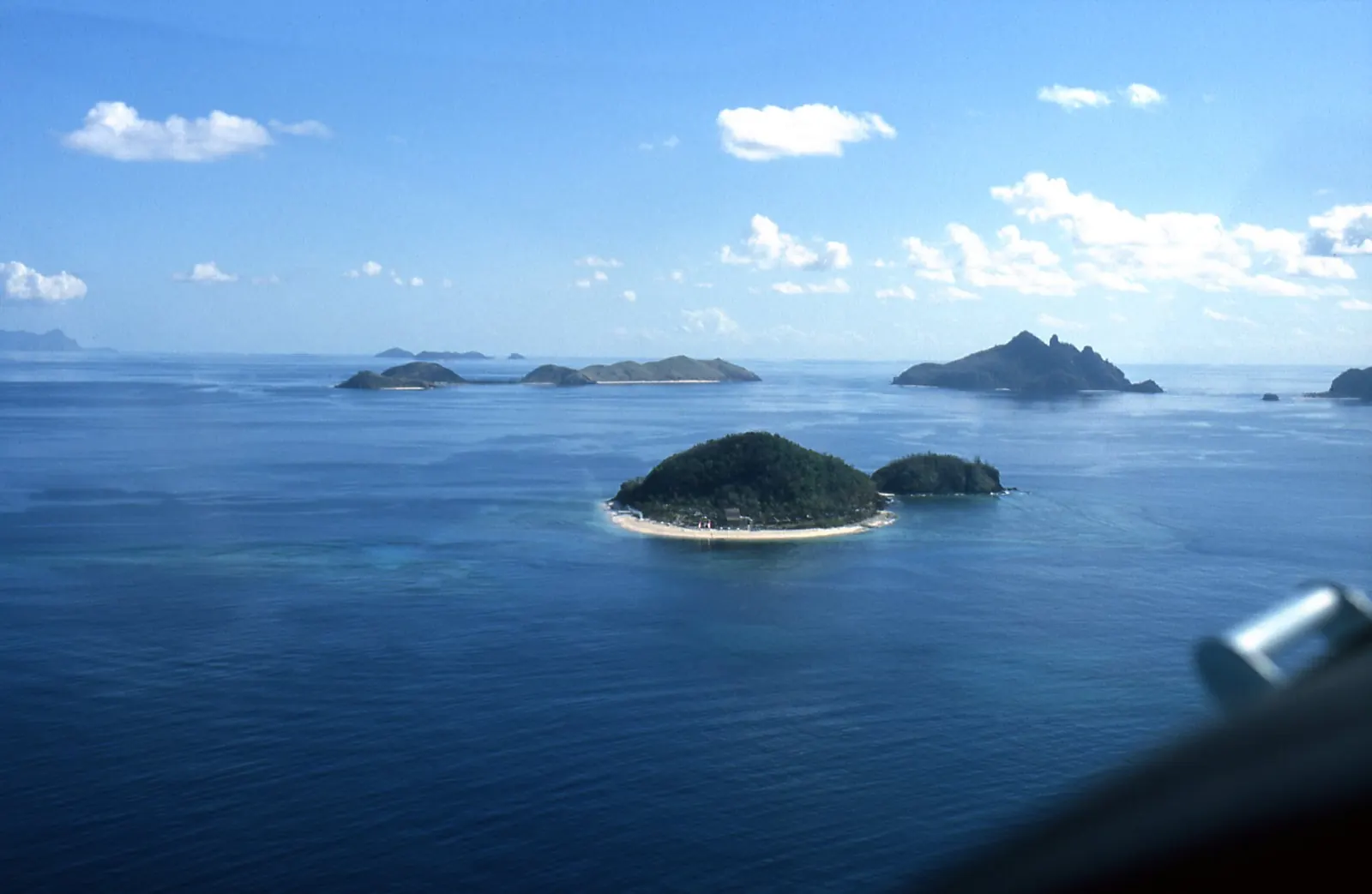
The straight answer
The best time to visit Fiji is May through October, the dry season, when trade winds keep the humidity down, seas stay clear for diving, and the cyclone season is safely out of the picture.
Fiji flips the tropical script: because it sits in the southern hemisphere, its winter, May through October, is the season you want. Those months bring the dry season: sunny days with highs near 84F (29C), lower humidity, steady southeast trade winds, and the year's best underwater visibility. It lines up perfectly with the northern summer vacation calendar, which is why July and August are also the busiest and priciest stretch.
The wet season runs November through April: hotter, near 88F (31C), stickier, with heavy afternoon downpours and, importantly, the South Pacific cyclone season. Most wet-season days still deliver plenty of sunshine, and resort prices drop meaningfully, but January through March carries the highest storm risk, and a cyclone can scramble a week of plans. Travel insurance stops being optional in that window.
The other timing layer is neighborly: Fiji is Australia's and New Zealand's beach escape, so their school holidays, especially June and July and the Christmas break, fill the family resorts even when the calendar says shoulder season. The savvy windows are May, early June, September, and October: full dry-season weather, thinner crowds, and better rates on everything from bures to boat transfers.
Fiji, month by month
Every month gets a verdict. Tap one for its own page: weather, crowds, prices and what is on.
- 01JanuaryThink twiceHot, humid, wet, highs near 88F (31C)The heart of cyclone season and the wettest stretch of the year, with holiday-week crowds lingering early month. Insurance and flexibility required.CrowdsPrice
- 02FebruaryThink twiceHot and humid, highs near 88F (31C), heavy rain likelyStatistically among the highest cyclone-risk months. Low prices and lush islands for gamblers; everyone else should aim for the dry season.CrowdsPrice
- 03MarchTradeoffsHot, humid, storms easing late month, highs near 88F (31C)Cyclone season winds down but is not over. Rain arrives in bursts; the reefs and rainforests are at their greenest.CrowdsPrice
- 04AprilGoodWarm, drying out, highs near 86F (30C)A genuinely underrated month: the wet season fades, prices stay soft, and dry-season conditions often arrive early.Hotels for April →CrowdsPrice
- 05MayBestDry season begins, highs near 84F (29C), lower humidityThe insider pick: peak-season weather before peak-season crowds and rates. Seas settle and visibility climbs.Hotels for May →CrowdsPrice
- 06JuneBestDry, sunny, trade-wind cooled, highs near 82F (28C)Prime conditions as Australian and New Zealand school holidays begin lifting family-resort bookings late month.Hotels for June →CrowdsPrice
- 07JulyGoodThe coolest, driest stretch, highs near 81F (27C)Peak season: perfect weather, full resorts, top rates. The Bula Festival brings a week of festivities to Nadi. Book months ahead.Hotels for July →CrowdsPrice
- 08AugustGoodDry and pleasant, highs near 81F (27C)Peak continues, with Suva's Hibiscus Festival adding carnival energy. Manta-ray season is in full swing in the Yasawas.Hotels for August →CrowdsPrice
- 09SeptemberBestDry, warm, highs near 82F (28C)The northern-hemisphere crowds thin while the weather holds. One of the best value-to-conditions months of the year.Hotels for September →CrowdsPrice
- 10OctoberBestWarming, still mostly dry, highs near 84F (29C)The dry season's last act, with Fiji Day (October 10) and Diwali celebrations adding festivity. Book early-month for the safest weather odds.Hotels for October →CrowdsPrice
- 11NovemberTradeoffsHotter and more humid, building showers, highs near 86F (30C)Transition month: often still lovely, officially the cyclone season's start. Prices drop and the islands quiet down.CrowdsPrice
- 12DecemberTradeoffsHot, humid, afternoon downpours, highs near 88F (31C)Wet-season weather meets the Christmas holiday surge from Australia and New Zealand: busy resorts, holiday pricing, and storm-watch season.CrowdsPrice
Book Fiji for May.
Sponsored links to Expedia and Vrbo. We may earn a commission; it never changes a verdict.
- Hotels for May
Hotels. Expedia
Hotels in FijiOpens a hotel search for Fiji in May, dates filled in. Book early for the best months: the good rooms go first.
- Rentals on Vrbo
Vacation rentals. Vrbo
Vacation rentals in FijiWhole homes, condos and villas. Usually the better deal for families and groups, with a kitchen and room to spread out.
- Tours and tickets
Tours and tickets. Expedia
Tours and tickets in FijiTimed-entry tickets, day trips and guided tours in Fiji for May. Popular slots sell out in the best months.
Why go to Fiji
The friendliest welcome in travel
The 'bula' greeting is a national reflex, village visits and kava ceremonies are genuine rather than staged, and Fijian warmth toward visitors, especially children, is the thing every traveler remembers longest.
Soft-coral diving of world renown
Fiji is often called the soft coral capital of the world: the Rainbow Reef, Beqa Lagoon's shark dives, and the Namena reserve draw divers across the Pacific, with the dry season offering the clearest water.
An island for every budget
Backpacker dorms in the Yasawas, family resorts on Denarau, adults-only hideaways, and private-island luxury: three hundred islands cover every price point with the same ocean.
Barefoot logistics
One international airport, well-run boat and seaplane networks, English spoken everywhere, and resorts that handle everything: Fiji delivers remote-island fantasy with easy-mode planning.
Things to do, and when to do them
Island-hop the Yasawas
The classic route: a catamaran threads the chain daily, dropping travelers at beaches from backpacker to boutique. Buy a flexible hop-on pass and drift.
Dive the Rainbow Reef and Great White Wall
Off Taveuni, the signature soft-coral sites fire best on running tides; dry-season months bring the visibility the reef deserves.
Snorkel with manta rays
Manta season in the Yasawas runs roughly May through October, when the rays channel-feed between islands; resorts run morning spotter boats.
Take a village visit and kava ceremony
A guided visit with a sevusevu (kava root) presentation is the cultural heart of a Fiji trip. Dress modestly and let your host lead the protocol.
Ride the Sigatoka River or the Navua rapids
Jet boats and village tours run the Sigatoka; rafting the Upper Navua's canyon is Fiji's green cathedral, best in and after wetter months when the river runs.
Laze on the Coral Coast
Viti Levu's southern shore strings resorts, reef flats, and the famous beaches within an easy drive of Nadi: the no-boat-required version of Fiji.
Surf Cloudbreak's neighborhood
One of the planet's heaviest, most famous waves breaks off Tavarua, with dry-season swells the biggest. Spectating from a boat is legitimate sport.
Sunset at a beach bure with a lovo feast
The earth-oven lovo, a meke dance night, and a west-facing beach: the standard resort culture night earns its place.
Events and seasons worth planning around
Bula Festival
A week in July
Nadi's biggest annual party: parades, music, and the crowning of festival royalty, timed to the heart of the dry season.
Hibiscus Festival
Roughly a week in August
Suva's long-running carnival brings rides, food stalls, and pageantry to the capital, one of the South Pacific's biggest festivals.
Fiji Day
October 10 every year
Independence day celebrations with flag raisings, church services, and community events nationwide.
Diwali
October or November, date follows the Hindu calendar
With Fiji's large Indo-Fijian community, Diwali is a national public holiday: lights, sweets, and fireworks, biggest in Suva and the western towns.
Australian and New Zealand school holidays
Late June through July, and mid December through January
Fiji's family resorts fill with trans-Tasman families in these windows; kids' clubs run at capacity and rates peak.
Beat the crowds
- Book May, September, or October: identical dry-season weather to July at a clear discount, with kids' clubs and dive boats running below capacity.
- Check the Australian and New Zealand school-holiday calendars before picking dates; they, more than the weather, decide when family resorts are full.
- Split your stay: a few nights on Viti Levu for ease, then an outer island (Yasawas, Taveuni, Kadavu) where the crowds thin to whoever shares your boat.
- Choose adults-only or dive-focused properties in the holiday windows if you are traveling without kids; the family resorts are joyfully loud in June and July.
- Book marquee dives, manta trips, and Cloudbreak surf charters ahead in peak season; boats are small and the good operators cap numbers.
Open or closed
- Cyclone season runs November through April, with the highest risk roughly January through March: resorts stay open by default, but storms can suspend boat transfers, close airports briefly, and rearrange a week. Buy travel insurance and build slack into wet-season trips.
- Sunday is observed seriously: many villages and towns quiet down, most shops close, and some activities pause. Resorts run normally; church singing, if you are invited, is a highlight, not a closure.
- Boat and seaplane transfers to outer islands run on daylight and weather; late international arrivals often mean a first night near Nadi before connecting onward.
- The Christmas through New Year fortnight is fully open and fully booked, at wet-season weather and peak-season prices, thanks to the Australian and New Zealand holiday exodus.
- Diwali (October or November) and Fiji Day (October 10) are public holidays with banks and offices closed; tourism carries on and the celebrations are worth joining.
With kids in tow
- Fiji may be the most family-friendly beach destination in the Pacific: Fijian staff famously adore children, and the big resorts' kids' clubs and included nanny traditions give parents actual vacations.
- Calm lagoon swimming, reef-walking at low tide, and first-snorkel-friendly water make it ideal for young kids; confirm your island has a swimmable beach at all tides, as some flats empty dramatically.
- The Coral Coast and Denarau resorts are the logistics-light family picks; the Yasawas add adventure for families with older kids who can handle boat days.
- For homeschool families: May, September, and October pair dry-season weather with quiet resorts, and the reef, the kava ceremony, and Fiji's blend of cultures make an effortless field-study term.
Getting there
- Nadi International (NAN) on Viti Levu's west side is the gateway. Fiji Airways flies nonstop from Los Angeles and San Francisco, roughly 10 to 11 hours, with connections onward across the South Pacific.
- From Texas, connect through Los Angeles or San Francisco; total journey runs 15 to 18 hours. You cross the date line westbound, landing two days later by the calendar, and get the day back on return.
- Onward travel is part of the plan: Denarau's marina (30 minutes from the airport) serves the Yasawa and Mamanuca boats, while domestic flights and seaplanes reach Taveuni and the outer islands in daylight hours.
Packing? Packing cubes and the airport kit.
Fiji for the holidays
Holiday and school-break weeks where Fiji makes our ranked list.
Fiji timing, quick answers
What is the best month to visit Fiji?
For pure conditions with fewer people, May, September, or early October: dry-season sunshine, calm clear water, and rates below the July and August peak. July has the coolest, driest weather if crowds and prices do not bother you.
When is cyclone season in Fiji?
November through April, with the highest risk roughly January through March. Most wet-season trips see nothing worse than afternoon downpours, but cyclones do occur; book flexible rates and carry travel insurance in that window.
Is Fiji's winter really the good season?
Yes. Fiji is in the southern hemisphere, so its winter, May through October, is the dry season: sunny, less humid, highs near 82 to 84F (28 to 29C), and the best diving visibility. 'Winter' is precisely when to go.
What is the cheapest time to visit Fiji?
February and March, the deep wet season, when resorts discount hardest, followed by November and early December. April is the value sweet spot: soft prices with rapidly improving weather.
How many days do I need in Fiji?
Seven nights is the sensible minimum given the long-haul flight and boat transfers: two or three nights near Nadi or the Coral Coast plus four or five on an outer island. Ten days lets you island-hop the Yasawas properly.
Weighing alternatives
Similar trips, with their best months.
Before you book.
Sort these two things first.
Sponsored links. We may earn a commission; it never changes a verdict.
- Visit Faye
Travel insurance.
FayeA missed connection, a bag that never turns up, a hospital abroad: far cheaper to cover before departure than to argue about after.
- Visit Saily
eSIM data.
SailySet up an eSIM before you fly so your phone has data the moment you land, without roaming charges.
Our top-rated travel gear
Whatever you decide, this is the gear we actually travel with: verified, priced, and ranked. Live price check on each.






As an Amazon Associate we may earn from qualifying purchases, at no cost to you.