Munich, Germany
Oktoberfest
The world's biggest folk festival: fourteen giant tents, six million visitors, and a very German kind of chaos.
The straight answer
Oktoberfest runs from mid September to the first Sunday of October every year, about two and a half weeks, so most of it actually happens in September.
Oktoberfest is the world's largest folk festival: roughly six million visitors over about two and a half weeks on Munich's Theresienwiese fairgrounds, the Wiesn to locals. Despite the name, the festival starts in mid September and ends on the first Sunday of October, a schedule shifted forward in the 1800s for better weather. Plan for September and you have understood the first trick.
It began in 1810 as the public celebration of a Bavarian royal wedding and never stopped. Today it is fourteen big tents and many smaller ones, each run by a Munich brewery or famous host family with its own character, brass-band-to-party-band soundtrack, and fiercely loyal following, surrounded by a full-scale funfair with roller coasters and a giant Ferris wheel.
The essential planning fact is that entry to the grounds and tents is free, but a seat is the currency of the Wiesn: you are only served beer at a table, tents fill by mid-morning on weekends, and the famous reservations are booked out months ahead. Winning Oktoberfest is a seating strategy, not a ticket purchase.
The event, explained
The festival opens on the first Saturday with the tapping of the first keg by Munich's mayor at noon, O'zapft is!, and no beer pours anywhere before it. The beer itself is special festival brew from Munich's six historic breweries, served only in one-liter Mass mugs, stronger than standard lager and priced accordingly. Rotisserie chickens, pretzels the size of steering wheels, and oompah bands that ratchet from folk tunes to singalong pop as the evening builds complete the formula.
Each tent is a distinct world: some skew traditional with brass bands and families at lunch, others are famous party tents where twenty-somethings stand on benches by late afternoon, and a wine tent and smaller tents offer quieter corners. Daytime midweek, the same tents host Munich families and retirees; the transformation by 6pm is total.
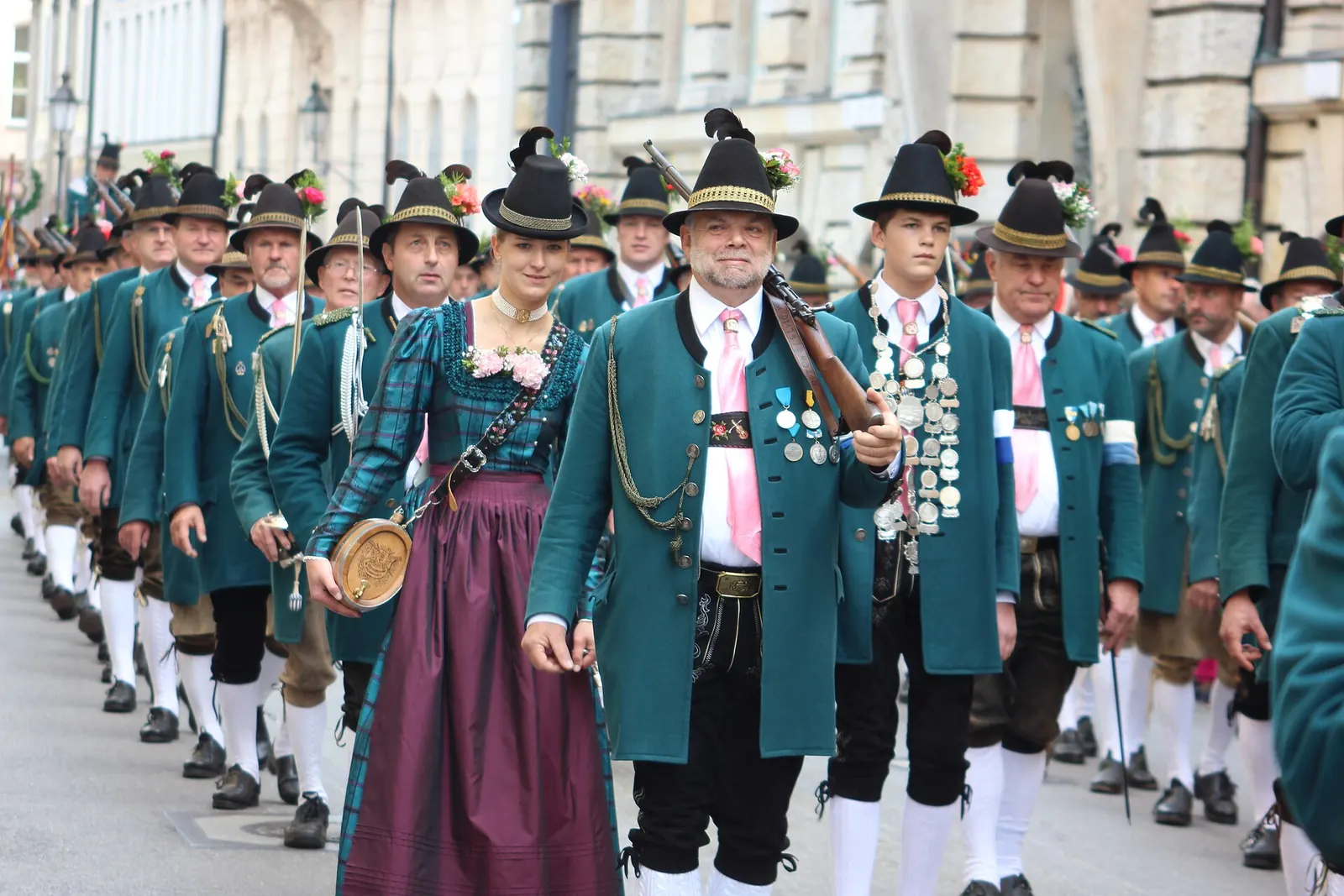
Beyond the tents, the fairground rides are excellent and underrated (the view from the Ferris wheel over the tent city at dusk is the festival's best photo), and the opening weekend's costume and riflemen's parades through Munich are proper Bavarian pageantry.
How to play it right
- 01Book Munich lodging four to six months ahead; rates double or triple citywide during the festival. Staying near any U-Bahn line beats staying walking-distance at a premium, since trains run to Theresienwiese constantly.
- 02For a guaranteed table, reserve directly with a tent months ahead (reservations are free or minimum-spend vouchers, booked on each tent's own site) or go with a hotel package. No reservation? Arrive on a weekday before 11am, or target the reserved-free sections every tent must keep; weekends without a reservation mean arriving at open, around 9am.
- 03Go midweek, in the afternoon, in the first week. Tuesday through Thursday afternoons offer seats, service, and singing without the crush; the middle weekend, especially with the first weekend of October, is the heaviest of all.
- 04Budget honestly: a liter of festival beer runs well into double-digit euros with tip, and a chicken-and-pretzel session for two with a few rounds is a real restaurant bill. Cash still rules in many tents; tip your server from round one and service follows you.
- 05Dress the part if you like (most attendees now wear dirndl or lederhosen; decent-quality versions are sold all over Munich), wear shoes that can handle spilled beer, and bring only a small bag; large bags are banned at the entrances.
- 06Know the exits: last call comes in the late evening, the whole crowd leaves at once, and the U-Bahn crush at closing is its own event. Leaving one hour early or walking one station further pays off.
With kids in tow
- Daytime Oktoberfest is genuinely family-friendly, which surprises people: weekday lunchtimes in the traditional tents are full of Munich families, the fairground is a top-tier amusement park, and designated family days offer reduced ride prices. Strollers are barred on the grounds in the busiest periods, so check the current rules.
- The switch flips around late afternoon: by evening the tents are loud, standing-on-benches drunk, and no place for children. The family formula is arrive at opening, rides and one tent lunch, leave by mid afternoon.
- The Oide Wiesn, the nostalgic historic section with vintage rides and calmer music, charges a small entry fee and is the best corner of the festival for kids, and honestly for anyone tent-weary.
Book your stay for Oktoberfest.
Sponsored links to Expedia and Vrbo. We may earn a commission; it never changes a verdict.
- Hotels for September
Hotels. Expedia
Hotels in OktoberfestOpens a hotel search for Oktoberfest in September, dates filled in. Book early for the best months: the good rooms go first.
- Rentals on Vrbo
Vacation rentals. Vrbo
Vacation rentals in OktoberfestWhole homes, condos and villas. Usually the better deal for families and groups, with a kitchen and room to spread out.
- Tours and tickets
Tours and tickets. Expedia
Tours and tickets in OktoberfestTimed-entry tickets, day trips and guided tours in Oktoberfest for September. Popular slots sell out in the best months.
Oktoberfest, quick answers
When is Oktoberfest?
From mid September to the first Sunday of October, roughly 16 to 18 days depending on the year. Most of the festival happens in September; the name is historical, not a scheduling tip.
Do I need tickets or reservations?
Entry is free; there are no tickets. But beer is served only to seated guests, so tables matter. Reserve directly with tents months ahead, or arrive weekday mornings and use the unreserved sections every tent keeps.
Which tent should I pick?
Match the tent to your evening: traditional tents for brass bands and families at lunch, the famous party tents for the bench-dancing scene, the wine tent for a change of pace. Tent-hopping in one afternoon is normal until the evening lock-in, when full tents close their doors.
How expensive is it?
The grounds are free, but beer runs well into double-digit euros per liter with tip, food is restaurant-priced, and Munich hotels double or more. A modest two-person tent session is a significant dinner bill; budget accordingly and it stings less.
When is it least crowded?
Weekday afternoons, Tuesday through Thursday, especially in the first week. Weekends are wall-to-wall, the middle Saturday is notorious, and Italian and Australian tour waves have their own famous weekends. Arrive before 11am any day you lack a reservation.
Also in September

The Great Migration
Serengeti, Tanzania and Masai Mara, Kenya
Year-round, with calving in the southern Serengeti from roughly late January to March and river crossings from about July to October
Burning Man
Black Rock Desert, Nevada
About nine days from the last Sunday of August through Labor Day, the first Monday of September
New England Fall Foliage
Vermont, New Hampshire & Maine
Late September through mid October, with peak color sweeping from north to south and high elevations downward
Northern Lights Season
Iceland, Norway & Finnish and Swedish Lapland
September through March, whenever nights are dark; the equinox months and deep winter each have their own case
Before you book.
Sort these two things first.
Sponsored links. We may earn a commission; it never changes a verdict.
- Visit Faye
Travel insurance.
FayeA missed connection, a bag that never turns up, a hospital abroad: far cheaper to cover before departure than to argue about after.
- Visit Saily
eSIM data.
SailySet up an eSIM before you fly so your phone has data the moment you land, without roaming charges.
Our top-rated travel gear
Whatever you decide, this is the gear we actually travel with: verified, priced, and ranked. Live price check on each.





As an Amazon Associate we may earn from qualifying purchases, at no cost to you.