Germany, Austria & France, multi-city
Christmas Markets in Europe
Mulled wine, wooden stalls, and medieval squares in lights: Europe's best-loved season, done city by city.
The straight answer
Europe's Christmas markets open in late November and run through Christmas Eve in most cities, so the first three weeks of December are the heart of the season; a few markets continue into early January.
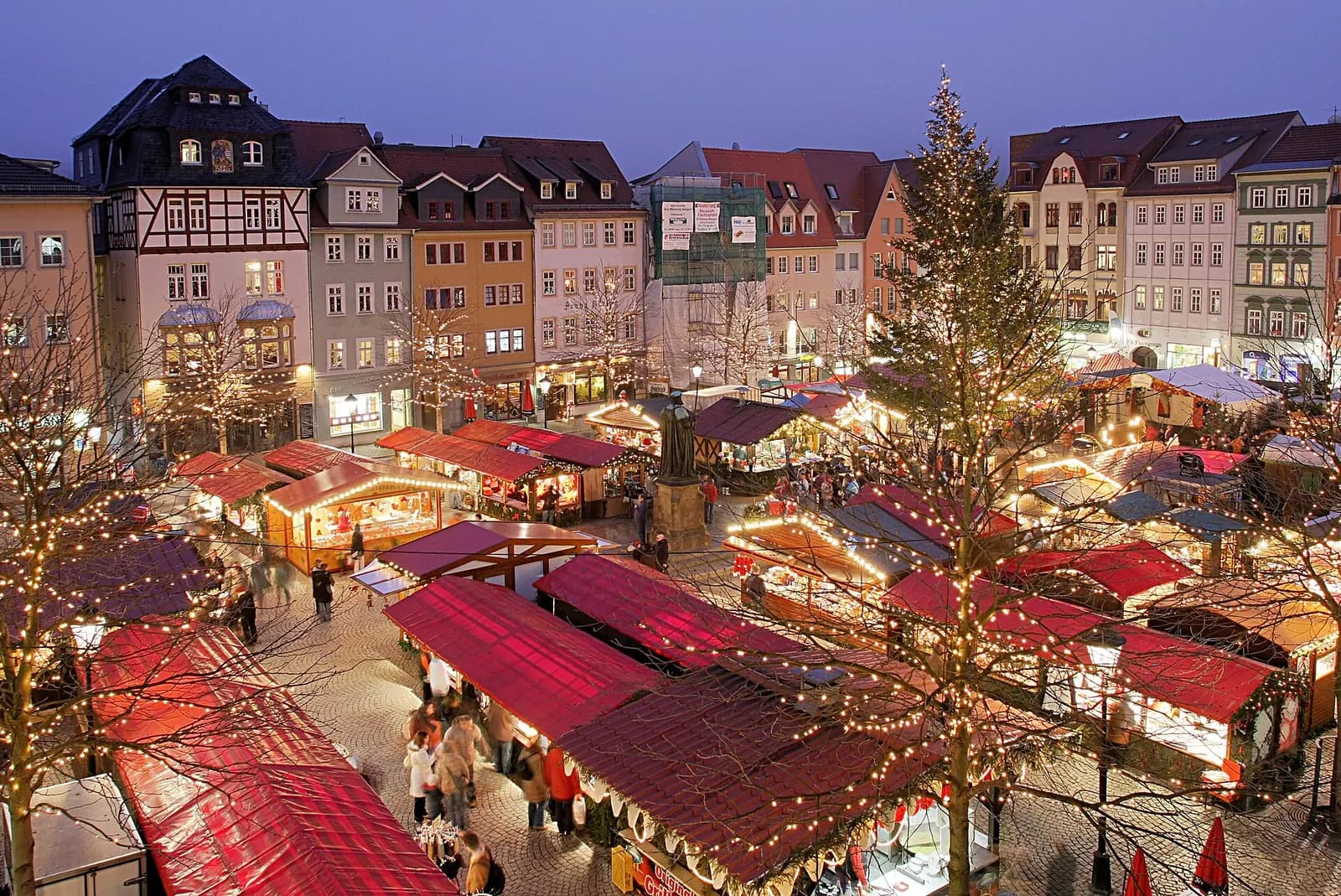
From late November until Christmas Eve, the old squares of central Europe fill with wooden stalls, strings of lights, and the smell of mulled wine and roasting almonds. The Christmas market is a German-speaking tradition centuries deep, and its heartland remains Germany, Austria, and Alsace in France, where nearly every town from metropolis to village mounts its own, and where the season is a genuine part of local life rather than a show for visitors.
The classic circuit names are earned: Nuremberg's Christkindlesmarkt with its gingerbread and famous opening ceremony, Dresden's Striezelmarkt claiming the deepest history, Vienna's markets fanned across palace squares, Strasbourg styling itself the capital of Christmas with all of Alsace glittering around it, plus Munich, Salzburg, Cologne, and Colmar. Each has its own specialty foods, its own mug design for the gluhwein deposit system, and its own character.
The timing rule of thumb: most markets open in the last week of November and close on or just before Christmas Eve, since the markets exist to serve the run-up, not the holiday itself. A handful, especially in Vienna and some big cities, reopen or continue between Christmas and early January. Go in the first three weeks of December and every market on your list is open.
The event, explained
A Christmas market is equal parts food festival, craft fair, and town gathering. The eating and drinking is the engine: gluhwein (mulled wine) served in collectible mugs against a small deposit, sausages and raclette, potato pancakes, lebkuchen gingerbread in Nuremberg, flammkuchen in Alsace, and regional pastries everywhere. The stalls between the food sell ornaments, wooden toys from the Erzgebirge, candles, and craft that ranges from heirloom to trinket.
The setting does half the work: these markets occupy the medieval and baroque hearts of their cities, under cathedral facades and town-hall towers, and the combination of lights, cold air, and centuries-old squares is the actual product. Evenings are the atmosphere peak, when the lights matter and locals come after work; weekday daytimes are the browsing peak.
City strategy differs: Vienna and Munich offer many distinct markets per city, so you hop neighborhoods; Nuremberg and Strasbourg concentrate a single grand market plus satellites; Alsace and Bavaria reward a rail-based multi-town circuit, where the small towns (Colmar, Rothenburg, villages along the Alsace Wine Route) deliver the storybook density the big cities cannot.
How to play it right
- 01Book two to four months ahead for December lodging in the marquee market cities: Strasbourg, Colmar, Nuremberg, and Salzburg in particular sell out their walkable centers for the season, and the pre-Christmas weekends price highest.
- 02Aim for the first two weeks of December midweek if you can: every market is open, the crowds are half of what the final pre-Christmas weekends bring, and Advent concerts and events are in full swing. The last weekend before Christmas is the season's crush.
- 03Do not overpack the itinerary: two or three bases beat six. A classic ten-day rail plan is one German hub (Nuremberg or Munich), one Austrian (Vienna or Salzburg), and Alsace (Strasbourg with Colmar day trips), each with an evening or two to enjoy markets after dark.
- 04Go both day and night in each city: daytime for browsing stalls and thin crowds, after dark for the lights and the after-work local scene. The 4 to 6pm golden window on weekdays gets both.
- 05Carry cash and small change: many stalls remain cash-first, and the mug deposit system (pay a few euros extra, return the mug or keep it as your souvenir) runs on coins. Gloves you can eat with and waterproof shoes for cobblestones are the uniform.
- 06Check closing dates for anything after December 24: most markets end on Christmas Eve, and towns go genuinely quiet on December 25 and 26. If your trip runs Christmas week itself, anchor it on Vienna or another city with New Year markets.
With kids in tow
- Christmas markets are effortless with kids: carousels and small rides at nearly every major market, children's gluhwein (kinderpunsch) at every stall that sells the adult version, craft demonstrations, and St. Nicholas appearances around December 6, a bigger deal locally than many visitors expect.
- The cold is the main management problem: markets are outdoor evening events in near-freezing weather, so real winter layers for kids, warm-up stops in cafes and churches, and a hot-chocolate budget keep the magic ahead of the misery.
- Weekend evening crowds in the famous squares get dense enough to lose a child in; weekday afternoons are the family sweet spot, and a lit-up carousel makes an excellent fixed meeting point.
Book your stay for Christmas Markets in Europe.
Sponsored links to Expedia and Vrbo. We may earn a commission; it never changes a verdict.
- Hotels for November
Hotels. Expedia
Hotels in Christmas Markets in EuropeOpens a hotel search for Christmas Markets in Europe in November, dates filled in. Book early for the best months: the good rooms go first.
- Rentals on Vrbo
Vacation rentals. Vrbo
Vacation rentals in Christmas Markets in EuropeWhole homes, condos and villas. Usually the better deal for families and groups, with a kitchen and room to spread out.
- Tours and tickets
Tours and tickets. Expedia
Tours and tickets in Christmas Markets in EuropeTimed-entry tickets, day trips and guided tours in Christmas Markets in Europe for November. Popular slots sell out in the best months.
Christmas Markets in Europe, quick answers
When do Europe's Christmas markets run?
Most open in the last week of November and close on or just before Christmas Eve, so the first three weeks of December are the reliable heart of the season. Some markets, notably in Vienna and other capitals, continue between Christmas and early January.
Which cities have the best markets?
Nuremberg, Dresden, Vienna, Salzburg, Munich, Cologne, Strasbourg, and Colmar are the marquee names, and small-town Alsace and Bavaria deliver the densest storybook atmosphere. Nearly every central European town has a market, so the honest answer is: the circuit, not one city.
When are the markets least crowded?
Weekday daytimes and early evenings in the first two weeks of December. The weekends before Christmas, and Strasbourg and Colmar on any December weekend, are the season's heaviest crowds.
Are the markets open after Christmas?
Mostly no; the majority close December 23 or 24. Vienna and several big cities run New Year markets into early January, so a Christmas-week trip should anchor on one of those, and expect December 25 and 26 to be very quiet everywhere.
How much should I budget for a market evening?
Modestly: a gluhwein runs a few euros plus a refundable mug deposit, a hearty stall dinner is takeaway-priced, and entry is free everywhere. The season's real costs are December hotel rates in the famous towns; book early and the trip is surprisingly affordable.
Also in November

Northern Lights Season
Iceland, Norway & Finnish and Swedish Lapland
September through March, whenever nights are dark; the equinox months and deep winter each have their own case
Dia de Muertos in Oaxaca
Oaxaca, Mexico
Builds through late October and peaks on November 1 and 2, with celebrations spanning roughly the last week of October into early November
Diwali in India
India nationwide
October or November, on the new moon of the Hindu month of Kartika; the date moves with the lunar calendar
Day of the Dead in Mexico City
Mexico City, Mexico
November 1 and 2 every year, with parades, altars, and events building through the second half of October
Before you book.
Sort these two things first.
Sponsored links. We may earn a commission; it never changes a verdict.
- Visit Faye
Travel insurance.
FayeA missed connection, a bag that never turns up, a hospital abroad: far cheaper to cover before departure than to argue about after.
- Visit Saily
eSIM data.
SailySet up an eSIM before you fly so your phone has data the moment you land, without roaming charges.
Our top-rated travel gear
Whatever you decide, this is the gear we actually travel with: verified, priced, and ranked. Live price check on each.




As an Amazon Associate we may earn from qualifying purchases, at no cost to you.