Ecuador, South America
The best time to visit Galapagos Islands
Wildlife is here every month, so the choice is between warm calm seas and cool, food-rich water full of life.
- Best months
- Apr to May and Nov
- Think twice
- No month is a write-off
- Quietest
- April
- Cheapest
- April
The straight answer
The best time to visit the Galapagos is April through May or November, the shoulder months between the warm and cool seasons, when seas are calmer, crowds are thinner, and wildlife activity is high.
Go in April and May, or in November. The Galapagos has two seasons, and both are good for wildlife. The warm season runs roughly December through May, with sunny skies broken by short tropical showers, highs in the mid 80sF (29C to 30C), calm seas, and water warm enough (around 75F to 79F, 24C to 26C) to snorkel without much of a wetsuit. The cool garua season runs roughly June through November, with gray misty skies, highs in the mid 70sF (24C), rougher seas, and cooler water (around 66F to 72F, 19C to 22C) that carries the nutrients drawing in more marine life.
April and May catch the transition: sea turtles hatching, waved albatrosses returning to Espanola, flowers after the rains, and seas still calm. November catches the end of the cool season, with sea lion pups on the beaches and seas settling down. Both months avoid the two big peaks: the North American summer from late June through August, and Christmas through New Year, when cruise berths sell out months in advance and prices jump.
The islands are a national park and a marine reserve with strict rules. Most visitors see them either on a small expedition cruise, which reaches remote islands and changes location every night, or on land-based trips from Santa Cruz, San Cristobal, or Isabela, which are cheaper but limited to the islands reachable by day boat. All visitors pay a park entry fee on arrival (raised to 200 US dollars for most foreign adults in 2024) plus a transit control card.
Galapagos Islands, month by month
Every month gets a verdict. Tap one for its own page: weather, crowds, prices and what is on.
- 01JanuaryGoodWarm and sunny with showers, highs near 84F (29C), water near 75F (24C)Warm season begins in earnest. Green sea turtles nest on the beaches and land birds start breeding. Early January is still holiday peak.Hotels for January →CrowdsPrice
- 02FebruaryGoodHot and humid, highs near 86F (30C), water near 77F (25C)Calm seas and the warmest water, great for snorkeling. Marine iguanas turn red and green on Espanola during breeding season.Hotels for February →CrowdsPrice
- 03MarchGoodHottest month, highs near 86F (30C), showersVery warm, with the heaviest brief rains. The first waved albatrosses may arrive on Espanola late in the month.Hotels for March →CrowdsPrice
- 04AprilBestHot, highs near 85F (29C), water near 77F (25C)Calm seas, lush green islands, sea turtle hatchlings, and the albatross returning to Espanola. A top month outside of Easter week.Hotels for April →CrowdsPrice
- 05MayBestWarm, highs near 82F (28C), water starting to coolA transition month with great wildlife: blue-footed booby courtship on North Seymour and waved albatross courtship on Espanola.Hotels for May →CrowdsPrice
- 06JuneGoodCooler and misty, highs near 79F (26C), water near 72F (22C)The garua season begins. Seas become rougher, the water cools, and whale sightings start to rise.Hotels for June →CrowdsPrice
- 07JulyTradeoffsCool, gray, highs near 77F (25C), water near 70F (21C)Excellent marine life thanks to nutrient-rich water, but peak family travel pushes prices and bookings to the top. Seas can be choppy.CrowdsPrice
- 08AugustTradeoffsCool and misty, highs near 76F (24C), roughest seasRich wildlife, including sea lion pupping, but crowded and expensive, with the roughest crossings of the year. Bring motion-sickness remedies.CrowdsPrice
- 09SeptemberQuiet valueCoolest month, highs near 75F (24C), water near 66F (19C)Cold water and rough seas, but few visitors. Some cruise boats schedule dry-dock maintenance around September and October.CrowdsPrice
- 10OctoberQuiet valueCool, highs near 76F (24C), water near 68F (20C)Similar to September, with fewer boats running. Fur seals and sea lions are active; a wetsuit is essential for snorkeling.CrowdsPrice
- 11NovemberBestMild, highs near 78F (26C), seas calmingThe garua fades, seas settle, and sea lion pups are playful in the shallows. One of the best value months.Hotels for November →CrowdsPrice
- 12DecemberGoodWarming, highs near 81F (27C), water near 73F (23C)The warm season returns and giant tortoise eggs hatch. Christmas through New Year is peak pricing; early December is excellent.Hotels for December →CrowdsPrice
Book Galapagos Islands for April.
Sponsored links to Expedia and Vrbo. We may earn a commission; it never changes a verdict.
- Hotels for April
Hotels. Expedia
Hotels in Galapagos IslandsOpens a hotel search for Galapagos Islands in April, dates filled in. Book early for the best months: the good rooms go first.
- Rentals on Vrbo
Vacation rentals. Vrbo
Vacation rentals in Galapagos IslandsWhole homes, condos and villas. Usually the better deal for families and groups, with a kitchen and room to spread out.
- Tours and tickets
Tours and tickets. Expedia
Tours and tickets in Galapagos IslandsTimed-entry tickets, day trips and guided tours in Galapagos Islands for April. Popular slots sell out in the best months.
Why go to Galapagos Islands
Wildlife with no fear of humans
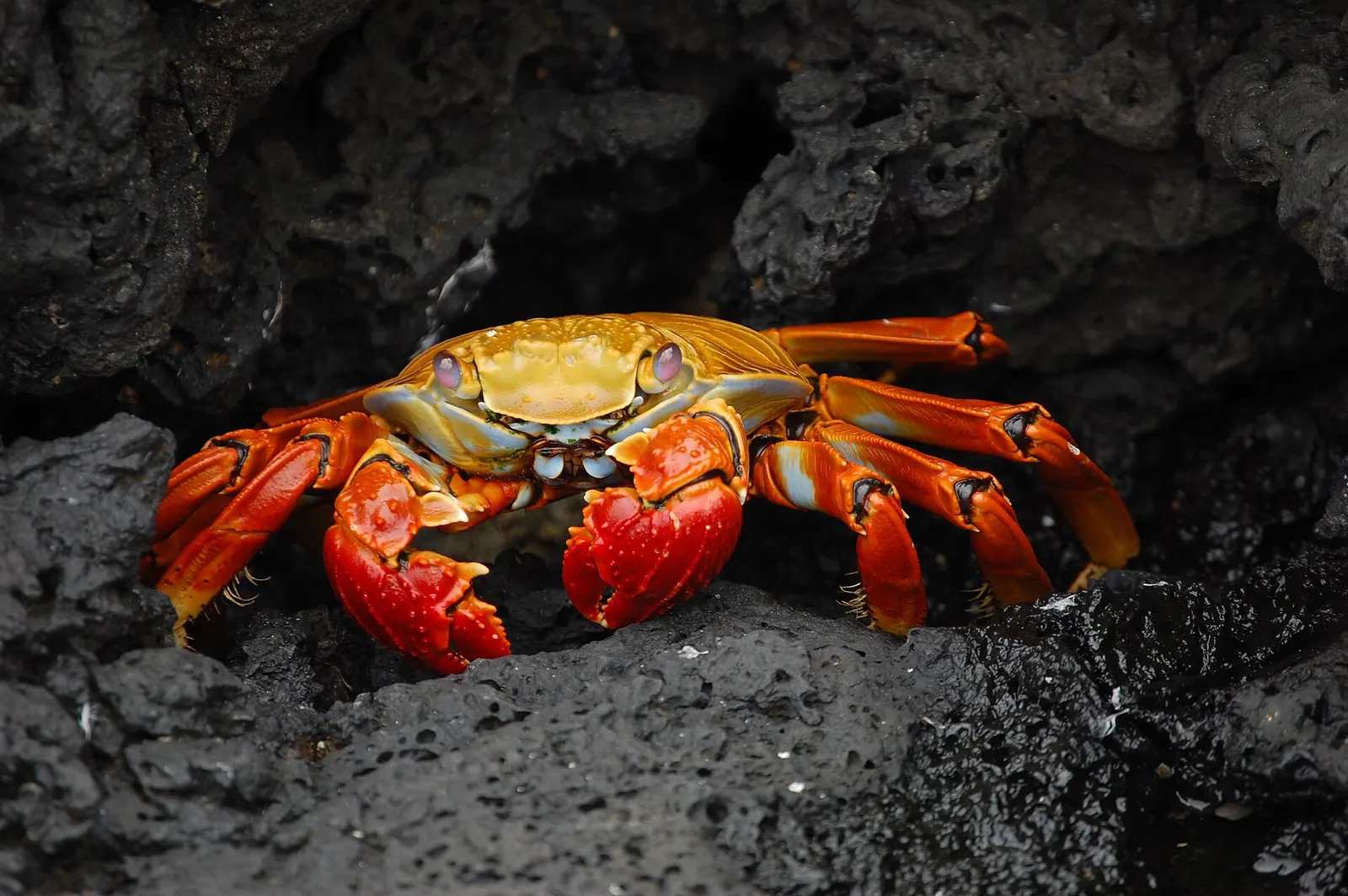
Sea lions sleep on park benches, blue-footed boobies dance a meter away, and marine iguanas pile on the rocks. Animals here evolved without predators and simply ignore you.
Species found nowhere else
Giant tortoises, marine iguanas, flightless cormorants, Galapagos penguins, and Darwin's finches are the famous endemics that shaped the theory of evolution.
World-class snorkeling and diving
Swim with sea lions, turtles, rays, and penguins in a single outing. Divers head north to Darwin and Wolf for hammerhead schools.
Volcanic landscapes
Lava fields on Santiago, the Sierra Negra caldera on Isabela, and the famous Pinnacle Rock view from Bartolome are some of the most striking scenery in the Pacific.
Things to do, and when to do them
Charles Darwin Research Station
On Santa Cruz, the main place to learn about tortoise conservation and the islands' science.
Santa Cruz highlands tortoise reserves
See wild giant tortoises grazing in the misty highlands. Mornings are cooler and the tortoises more active.
Espanola Island
Waved albatross colonies from roughly April to December, plus blue-footed boobies and colorful marine iguanas. Reached by cruise or select day tours.
Bartolome and Pinnacle Rock
Climb to the classic viewpoint, then snorkel with penguins in the bay.
Isabela Island
The largest island, with the Sierra Negra volcano, flamingo lagoons, and penguins along the coast near Puerto Villamil.
North Seymour
Frigatebird and blue-footed booby colonies close to Santa Cruz. The easiest place to see the booby courtship dance.
Kicker Rock (Leon Dormido)
A snorkel and dive site off San Cristobal known for sea lions, turtles, and sharks.
Events and seasons worth planning around
Waved albatross season on Espanola
Roughly April through December
Nearly the entire world population nests on Espanola. Courtship dances peak in the early months.
Green sea turtle nesting
Roughly December through June
Turtles come ashore to nest in the warm season, with hatchlings emerging from around March.
Sea lion pupping
Roughly June through November, peaking in August
Pups crowd the beaches, and young sea lions become playful snorkel companions.
Blue-footed booby courtship
Year-round, with strong activity from May through August
The foot-lifting, sky-pointing dance is easiest to see on North Seymour and Espanola.
Beat the crowds
- Avoid late June through August and Christmas to New Year, when cruises sell out and prices peak.
- April, May, and November give the best balance of wildlife, sea conditions, and availability.
- Book small expedition cruises 6 to 12 months ahead for high season; last-minute deals sometimes appear in Quito or Puerto Ayora in the shoulder months.
- On land-based trips, stay on Isabela or San Cristobal for a quieter base than Santa Cruz.
Open or closed
- Some cruise boats go into dry dock for maintenance around September and October, limiting options in those months.
- Visitor sites are strictly regulated: most require a licensed naturalist guide, and itineraries are set by the park, so not every boat visits every island.
- The park entry fee is paid in cash on arrival, and the transit control card is bought in Quito or Guayaquil before the flight.
- Rough seas in August and September can lead to changes in day tours and uncomfortable crossings between islands.
With kids in tow
- The Galapagos is one of the best wildlife trips on Earth for kids: the animals are close, safe, and easy to see.
- Many small cruises set minimum ages, often around six years old. Land-based trips are easier for younger children.
- Rough seas in the cool season can mean seasickness on boats; the warm season is gentler for families.
- For homeschool families, the islands are a living lesson in evolution, biology, and conservation where Darwin's ideas took shape.
Getting there
- Fly to Quito (UIO) or Guayaquil (GYE) on the Ecuadorian mainland, with nonstops from Miami, Houston, Atlanta, Fort Lauderdale, and New York, among others.
- From there, daily flights reach Baltra (for Santa Cruz) or San Cristobal in about two hours from Guayaquil or three and a half from Quito.
- Plan at least one buffer night on the mainland before the islands so a missed connection does not cost you a cruise departure.
Packing? Packing cubes and the airport kit.
Galapagos Islands timing, quick answers
What is the best month to visit the Galapagos?
April or May, followed closely by November. Calm seas, great wildlife, and fewer crowds than summer or the holidays.
What is the cheapest time to visit the Galapagos?
September and October, the quietest months, though the water is coldest and some boats are in dry dock.
When is the rainy season in the Galapagos?
The warm season from December through May brings short tropical showers, mostly in the afternoon. The cool garua season from June through November is misty but gets little actual rain.
When are the seas calmest in the Galapagos?
From roughly January through May. The roughest seas are in August and September.
When is the water warmest for snorkeling?
February through April, when water reaches around 77F (25C). In the cool season, it drops to around 66F to 72F (19C to 22C) and a wetsuit is essential.
How far ahead should I book a Galapagos cruise?
Six to twelve months for July, August, and the holidays. Three to six months is usually enough for the shoulder months.
Weighing alternatives
Similar trips, with their best months.
Before you book.
Sort these two things first.
Sponsored links. We may earn a commission; it never changes a verdict.
- Visit Faye
Travel insurance.
FayeA missed connection, a bag that never turns up, a hospital abroad: far cheaper to cover before departure than to argue about after.
- Visit Saily
eSIM data.
SailySet up an eSIM before you fly so your phone has data the moment you land, without roaming charges.
Our top-rated travel gear
Whatever you decide, this is the gear we actually travel with: verified, priced, and ranked. Live price check on each.





As an Amazon Associate we may earn from qualifying purchases, at no cost to you.