Spain, Europe
The best time to visit Canary Islands
Europe's closest thing to guaranteed winter sun, where timing is more about price and crowds than weather.
- Best months
- May to Jun and Sep to Oct
- Think twice
- No month is a write-off
- Quietest
- May
- Cheapest
- May
The straight answer
The best time to visit the Canary Islands is May through June or September through October, when the weather is warm, the sea is at its best, and prices sit between the winter-sun peak and the Spanish August rush, though the islands are genuinely good year-round.
Go in May and June or September and October for the best balance, but understand that the Canaries are a year-round destination in a way almost nowhere else in Europe is. Sitting off the coast of Morocco and cooled by the trade winds, the islands keep highs in the low 70s F (about 21 to 23C) through winter and rarely go much above the low 80s F (about 28C) in summer. Nothing closes for a season.
That stability flips the usual logic. Winter, roughly November through March, is actually high season, because Northern Europeans come for the sun; resort prices peak around Christmas, New Year, and February half-term, and the Santa Cruz de Tenerife Carnival fills hotels. August is the other peak, when mainland Spain goes on holiday. The windows in between are when you get the same climate for less money and fewer people, with the sea warmest in September and October.
The islands differ more than the weather charts suggest. Tenerife and Gran Canaria have big resorts, volcanic high country, and genuine cities; Lanzarote is a lunar landscape shaped by the artist Cesar Manrique; Fuerteventura is dunes and wind; La Palma, La Gomera, and El Hierro are green, steep, and quiet. North coasts are cloudier and cooler than south coasts on the same island, often by several degrees. Month by month below.
Canary Islands, month by month
Every month gets a verdict. Tap one for its own page: weather, crowds, prices and what is on.
- 01JanuaryGoodMild and mostly sunny, highs near 70F (21C), sea near 66F (19C)Peak winter-sun season for Europeans, so resorts are busy and priced up. Warm enough for the beach on sunny days, cool at night, and snow possible on Teide.Hotels for January →CrowdsPrice
- 02FebruaryGoodMild, highs near 71F (21C), coolest sea of the yearCarnival season, especially in Santa Cruz de Tenerife and Las Palmas, and European school half-term push prices up.Hotels for February →CrowdsPrice
- 03MarchGoodMild and sunny, highs near 72F (22C)Winter crowds thin after half-term, almond blossom fades into spring wildflowers, and hiking conditions are excellent.Hotels for March →CrowdsPrice
- 04AprilGoodPleasant, highs near 73F (23C)Easter week brings a surge of Spanish and European families; outside it, April is calm and very good value.Hotels for April →CrowdsPrice
- 05MayBestWarm and dry, highs near 75F (24C)One of the quietest, cheapest months with excellent weather. Some cloud on north coasts, but the south is reliably sunny.Hotels for May →CrowdsPrice
- 06JuneBestWarm, highs near 77F (25C), sea warmingLong days and great hiking at altitude before the summer holiday rush. Corpus Christi flower carpets in La Orotava often fall in June.Hotels for June →CrowdsPrice
- 07JulyGoodWarm and dry, highs near 80F (27C), windy on eastern islandsSummer holidays begin. Trade winds keep temperatures comfortable; Lanzarote and Fuerteventura are breezy.Hotels for July →CrowdsPrice
- 08AugustTradeoffsHot at times, highs near 82F (28C), occasional calima dust from the SaharaSpain's holiday month: the busiest and priciest of summer. Calima episodes can bring haze and short bursts of much higher heat.CrowdsPrice
- 09SeptemberBestWarm, highs near 82F (28C), sea at its warmest near 73F (23C)The warmest water of the year with the August crowds gone. The Fiesta del Pino in Teror peaks around September 8.Hotels for September →CrowdsPrice
- 10OctoberBestWarm, highs near 79F (26C), first autumn showers possibleStill summer at sea level, and the gap before winter-sun pricing. A top pick.Hotels for October →CrowdsPrice
- 11NovemberGoodMild, highs near 75F (24C), a few rainy daysThe winter season starts building. One of the wetter months, though rain is usually brief.Hotels for November →CrowdsPrice
- 12DecemberGoodMild, highs near 72F (22C), some rainEarly December is reasonable; Christmas and New Year are among the most expensive weeks of the year.Hotels for December →CrowdsPrice
Book Canary Islands for May.
Sponsored links to Expedia and Vrbo. We may earn a commission; it never changes a verdict.
- Hotels for May
Hotels. Expedia
Hotels in Canary IslandsOpens a hotel search for Canary Islands in May, dates filled in. Book early for the best months: the good rooms go first.
- Rentals on Vrbo
Vacation rentals. Vrbo
Vacation rentals in Canary IslandsWhole homes, condos and villas. Usually the better deal for families and groups, with a kitchen and room to spread out.
- Tours and tickets
Tours and tickets. Expedia
Tours and tickets in Canary IslandsTimed-entry tickets, day trips and guided tours in Canary Islands for May. Popular slots sell out in the best months.
Why go to Canary Islands
Sun when Europe is gray
Highs in the low 70s F (about 21C) in January, a few hours' flight from much of Europe, make the Canaries the continent's winter-sun default.
Spain's highest mountain
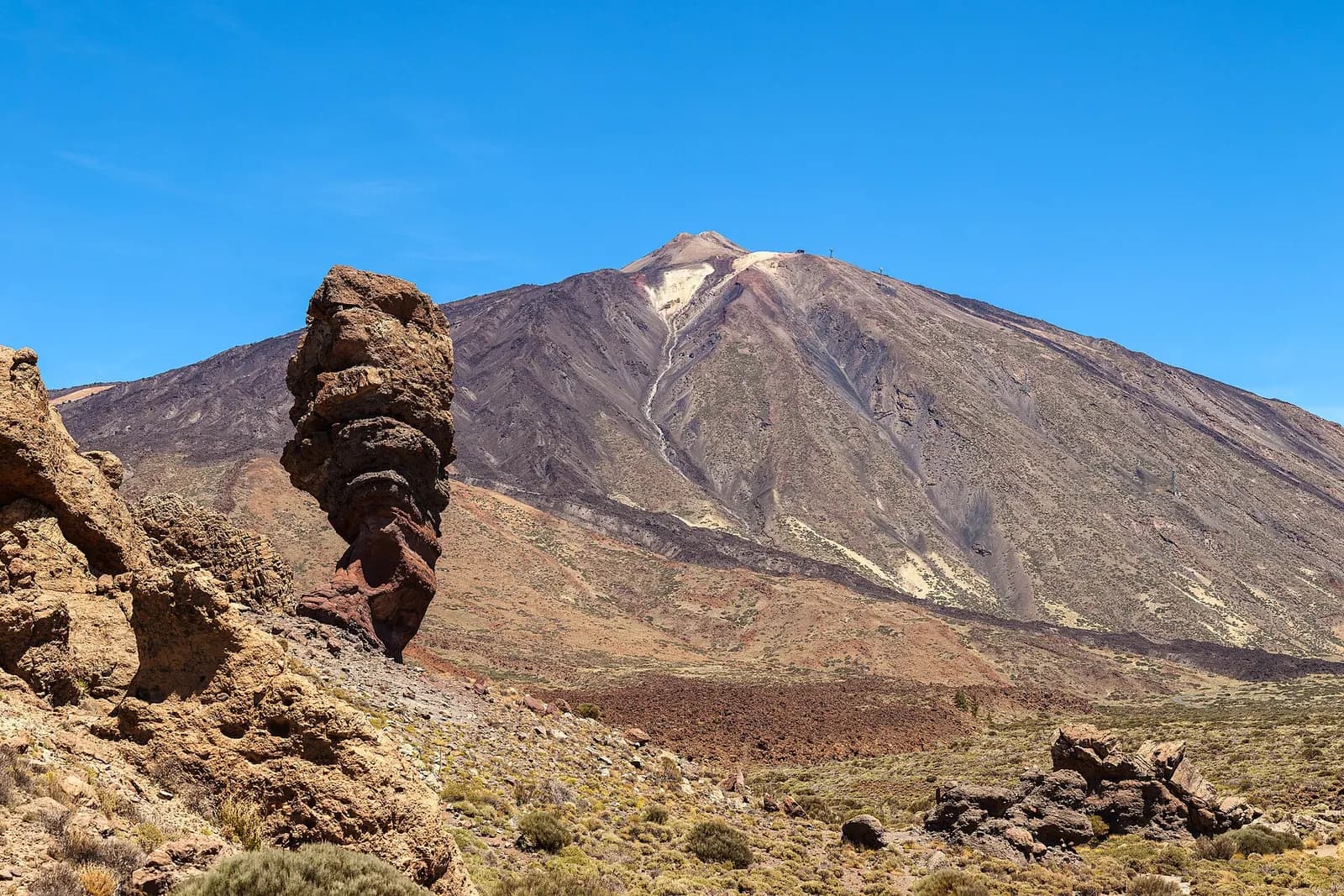
Mount Teide on Tenerife rises to about 12,200 feet (3,715 m) from a vast volcanic caldera, a national park and UNESCO World Heritage Site you can reach by road and cable car.
Seven islands, seven moods
Resort beaches, black-sand coves, laurel forests, lava fields, and dunes. Inter-island ferries and short flights make combining two or three easy.
Some of the world's best stargazing
La Palma's Roque de los Muchachos and Teide both host major observatories, and the islands protect their night skies by law.
Things to do, and when to do them
Teide National Park and cable car
The cable car climbs to about 11,660 feet (3,555 m). The final path to the summit needs a free permit booked well in advance. Winds can halt the cable car in any season.
Timanfaya National Park, Lanzarote
A landscape of craters and lava from 18th-century eruptions, visited by coach route from the Montanas del Fuego visitor center.
Cesar Manrique's Lanzarote
Jameos del Agua, the Mirador del Rio, and the Cactus Garden show how one artist shaped an entire island's look.
Maspalomas Dunes, Gran Canaria
A protected dune field on the south coast. Walk it at sunrise before the heat and the crowds.
Roque Nublo, Gran Canaria
A volcanic monolith at the island's high center reached by a short, popular hike. Go early; parking fills fast on weekends.
Garajonay National Park, La Gomera
A UNESCO-listed laurel cloud forest, a day trip by ferry from Tenerife.
Stargazing on La Palma
Guided sky tours and public viewpoints across the island, best on moonless nights.
Events and seasons worth planning around
Carnival of Santa Cruz de Tenerife
February or early March, tied to the start of Lent
One of the world's largest carnivals, with weeks of parades, costume contests, and street parties. Book Tenerife hotels early.
Las Palmas de Gran Canaria Carnival
February or March, around Lent, varies by year
A huge rival carnival famous for its drag queen gala. Dates are set each year and sometimes run later than Tenerife's.
Corpus Christi flower carpets, La Orotava
Late May or June, following the Corpus Christi date
Intricate carpets of petals and volcanic sand laid in the streets of La Orotava on Tenerife.
Fiesta del Pino, Teror
Early September, peaking around September 8
Gran Canaria's biggest religious festival, with pilgrims walking to the basilica in Teror from across the island.
Beat the crowds
- Avoid the Christmas to New Year fortnight, February half-term, Easter week, and August if price matters; the same weather is available for much less in May, June, and October.
- Book the Teide summit permit weeks or months ahead and take the first cable car of the day to beat both queues and afternoon cloud.
- Stay outside the big southern resorts: Puerto de la Cruz on Tenerife, Agaete on Gran Canaria, or rural casas on La Gomera and La Palma.
- Do Timanfaya and Jameos del Agua at opening, before tour coaches arrive from the resorts.
Open or closed
- Nothing closes for a season. Hotels, restaurants, parks, and beaches operate all year.
- The Teide cable car stops in high winds or ice, and the summit trail requires a permit. Winter storms occasionally close the park's upper roads.
- Calima dust episodes, most common in summer and winter, can bring haze, poor air quality, and flight disruptions for a day or two.
- Sundays and public holidays close many shops in towns, though resort areas stay open.
With kids in tow
- The Canaries are one of Europe's easiest family beach destinations: short flights from Europe, mild weather in every school holiday, and calm beaches such as Playa de las Vistas on Tenerife and Playa de Mogan on Gran Canaria.
- Lanzarote's Timanfaya demonstrations, where water poured into the ground erupts as steam, are a hit with kids and a strong homeschool volcano lesson.
- The high altitude at Teide's cable car station can affect young children and anyone with heart or breathing conditions; check the operator's guidance.
- Pack layers even in summer. Teide and the island interiors can be 30F (17C) cooler than the coast.
Getting there
- Main airports are Tenerife South (TFS), Tenerife North (TFN), Gran Canaria (LPA), Lanzarote (ACE), and Fuerteventura (FUE), with smaller airports on La Palma, La Gomera, and El Hierro.
- Most travelers from the US connect through Madrid, Barcelona, or another European hub. Flights from mainland Spain take about two and a half to three hours.
- Inter-island ferries and short Binter flights link the islands; Tenerife to La Gomera is under an hour by fast ferry.
Packing? Packing cubes and the airport kit.
Canary Islands timing, quick answers
What is the best month to visit the Canary Islands?
October. The sea is still at its warmest, highs sit in the upper 70s F (about 26C), and it falls in the gap between August's Spanish holiday peak and winter-sun season.
What is the cheapest time to visit the Canary Islands?
May and June, followed by early November and early December (outside the holidays). The weather is excellent and resort prices are well below winter peaks.
Are the Canary Islands warm in winter?
Yes, mild rather than hot. Highs sit around 70F (21C) at sea level with plenty of sun, especially on south coasts. Evenings are cool and the sea is around 66F (19C).
When is the rainy season in the Canary Islands?
Most of the limited rain falls from November through February, usually in brief spells. North coasts and the western islands get more than the south and east.
Which Canary Island is warmest in winter?
The south coasts of Gran Canaria and Tenerife are the most reliably sunny and warm. Lanzarote and Fuerteventura are also dry but windier.
Is it too hot in the Canary Islands in summer?
Rarely. Trade winds keep highs mostly around 80F (27C). The exception is calima episodes, when Saharan air can briefly push temperatures much higher.
Weighing alternatives
Similar trips, with their best months.
Before you book.
Sort these two things first.
Sponsored links. We may earn a commission; it never changes a verdict.
- Visit Faye
Travel insurance.
FayeA missed connection, a bag that never turns up, a hospital abroad: far cheaper to cover before departure than to argue about after.
- Visit Saily
eSIM data.
SailySet up an eSIM before you fly so your phone has data the moment you land, without roaming charges.
Our top-rated travel gear
Whatever you decide, this is the gear we actually travel with: verified, priced, and ranked. Live price check on each.





As an Amazon Associate we may earn from qualifying purchases, at no cost to you.